

Full Mouth Dental Implants – melbourne, FL
If you’ve lost most or all of your teeth, or if you’ve struggled with loose dentures, life can feel like it’s on pause. Eating your favorite foods, smiling with confidence, or speaking clearly may not feel as natural as they once did. At the practice of Robert L. Burns, DMD, we specialize in restoring smiles with full mouth dental implants—a stable, lasting solution designed to bring comfort, confidence, and function back into your everyday life.
What Are Full-Mouth Dental Implants?
Full mouth dental implants replace an entire set of missing teeth with implant-supported restorations, rather than relying on traditional dentures that can slip or rub uncomfortably. Implants function like artificial tooth roots, providing your new smile with a secure foundation.
Benefits of full mouth implants include:
- A natural look and feel that restores confidence
- Stable chewing power so you can enjoy your favorite meals again
- Long-term durability compared to dentures
- Prevention of bone loss in the jaw
Do You Qualify for Full Mouth Implants?
You may be a good candidate if you’ve lost most or all of your teeth, are tired of dentures, or want a more permanent option. You will also need to be in good health with enough jawbone structure to support dental implants. During your consultation, Dr. Burns will evaluate your oral health and medical history to recommend the right tooth replacement option for you.
Types of Full-Mouth Implant Treatments We Offer
Every smile is unique, so we offer several options to meet each patient’s needs:
- All-on-4 Implants: A fixed set of teeth supported by just four strategically placed implants. This option offers a strong, lasting solution with fewer implants required. For patients with some jawbone loss, All-on-4 implants can reduce the need for bone grafting.
- Snap-On Dentures: A removable denture that “snaps” securely onto dental implants. Snap-on dentures provide extra stability while remaining easy to remove for cleaning.
- Permanent Screw-Retained Implants: A fully fixed solution that functions and feels like natural teeth. These permanent dental implants stay in place for the most natural eating and speaking experience.
Cost & Financing
The cost of full mouth dental implants varies depending on your specific needs. Factors that influence cost include:
- Number of implants placed
- Type of prosthesis (snap-on dentures, permanent dental implants, or All-on-4 implants)
- The complexity of the procedure
- The type of anesthesia used
- Whether bone grafting or other procedures are needed
Insurance coverage for implants is often limited, but we don’t want financial concerns to stand in the way of your health and confidence. Our office offers flexible options, including in-house financing and third-party payment plans, to help treatment fit comfortably into your budget.
Why Choose Dr. Robert L. Burns?
Your smile deserves skilled, compassionate care. Dr. Burns is an experienced oral surgeon and a proud member of the International Congress of Oral Implantologists. He combines advanced training with a warm, patient-focused approach, helping you feel comfortable every step of the way.
Learn How We Can Permanently Restore Your Smile
If you’ve been considering full mouth dental implants, snap-on dentures, or permanent dental implants, now is the time to explore your options. Contact our Melbourne, FL office at Dr. Robert L. Burns, DMD Office Phone Number 321-752-0809 today to schedule your consultation with Dr. Burns and discover how a new smile can change your life.
What if I Only Need One Arch of Teeth Replaced?
Missing All Lower Teeth
Although many patients have no problem wearing an upper denture, some people find it difficult to wear and eat with lower dentures. Several implant-supported replacement options are available if you are missing all of your lower teeth.
Dental Implants are Changing the Lives of Patients
Feel Confident in Your Smile, Call Us!
Ball Attachment Denture
One option is to have two implants placed in your lower jaw and a denture made that snaps onto these implants. This option allows your lower denture to be more stable while chewing than without implants. However, there will still be movement of your lower denture, and sore spots will occur if any food particles, especially seeds, are caught under it. As with all removable replacement teeth, you still will need periodic appointments for denture adjustment.
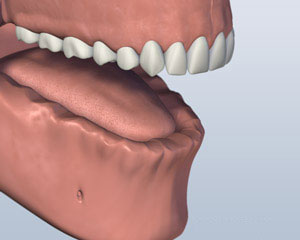
1. Before
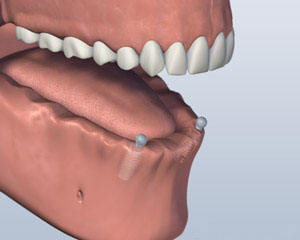
2. Implants Placed
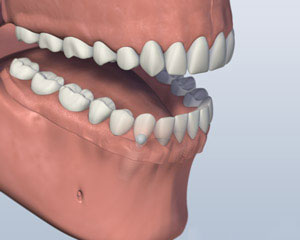
3. Denture Attached
Bar Attachment Denture
Another option involves placing four to six implants, depending on your jaw size or shape, into your lower jaw. After healing is complete, the implants are connected with a custom-made support bar. Your denture will be made with special internal retention clips that attach onto the support bar, enabling the denture to snap firmly into place. This is called an “overdenture.” The advantage of this option is that it is much more stable than the first option and allows very little denture movement. Your denture is still removable for easy cleaning and maintenance.
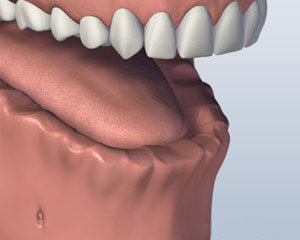
1. Before
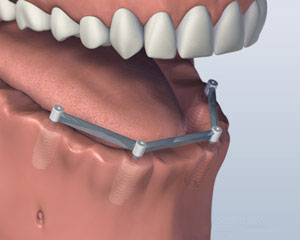
2. Implants Placed
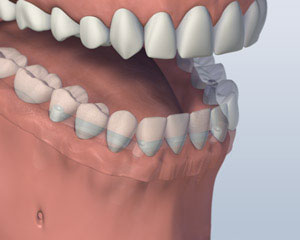
3. Denture Attached
Screw Retained Denture
A third option involves placing five or more implants in your jaw and attaching a permanent denture. Your denture is held in place by screws or clasps that secure it to the support posts or bar. It doesn’t touch the gum tissue, which allows you to clean under the denture without removing it. This denture will replace all your missing lower teeth and will not be removed except at maintenance visits. Although cleaning under your denture without removing it is more time consuming and requires more dexterity, many patients who want a permanent denture prefer this option.
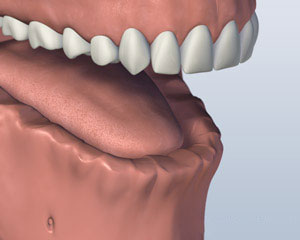
1. Before
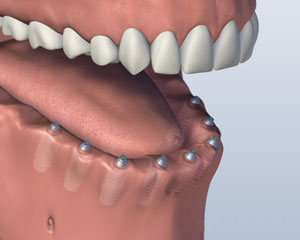
2. Implants Placed
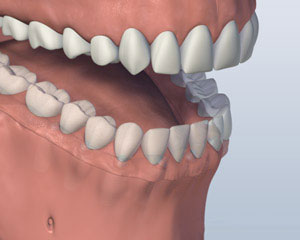
3. Denture Attached
Individual Implants
The final option is to have all your teeth individually replaced so that they will appear to be growing out of your gum tissue and will most closely resemble the appearance of your natural teeth. This option usually requires eight or more implants. Separate abutments or support posts for each one of these implants will be made and crowns for each missing tooth will be placed. The teeth are often joined together for sinus grafting to replace bone height strength and support. Overall, this is the most costly option, because it requires the most implants and individual replacement tooth fabrication. Your replacement options may also be limited by the current size and shape of your jawbone.
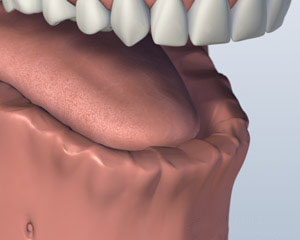
1. Before
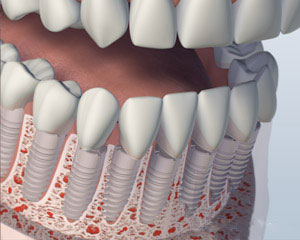
2. Implants Placed
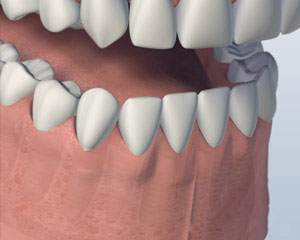
3. Healing Completed
Ready to schedule a consultation with Dr. Burns?
Call our office at Dr. Robert L. Burns, DMD Office Phone Number 321-752-0809 or request an appointment online.
What If I’m Missing All Of My Upper Teeth?
A similar range of treatment options is also available for your upper jaw. However, because the bone is not as hard as that in the lower jaw, people often need more implants to support their new replacement teeth. Depending upon the number of implants to be placed, it may be possible to eliminate the need for covering the roof of your mouth with a complete denture. This option allows you to fully taste your food and gives you a better sense of its temperature. Your denture will feel more natural. You will still have a removable denture, which makes cleaning the support bar and denture much easier.
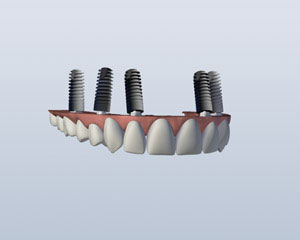
Implant Retained Upper Denture
Depending upon the number of implants to be placed, it may be possible to eliminate the need for covering the roof of your mouth with a complete denture. This option allows you to fully taste your food and gives you a better sense of its temperature. Your denture will feel more natural. You will still have a removable denture, which makes cleaning the support bar and denture much easier.
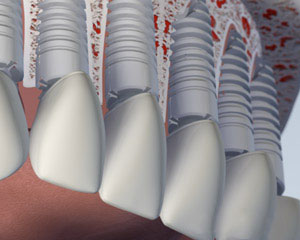
Individual Upper Implants
If you want a restoration that is similar to your natural teeth and therefore not removable, you probably will need eight to ten individual implants placed. This is followed after healing by the placement of the abutments and new replacement crowns.